Plan your trip. 5 minute read. Updated 3 October 2026.
Swimming with seals in Plettenberg Bay is a carefully managed activity, but it is not risk-free: you are in the open sea with wild animals. The real risks are sharks in winter, the current rabies outbreak in Cape fur seals, the chance of a nip from a seal, and ordinary sea conditions.
Each of those is managed in a specific way. This page sets out what the risks are and what we do about them, so you can decide for yourself.
The short version
- Seals: curious rather than aggressive, but wild. You don't touch them.
- Sharks: present around the colony in winter. Swimming stops in June and July.
- Rabies: there is an outbreak in Cape fur seals in South Africa. We have changed how we run trips because of it.
- The sea: trips only go when conditions allow, and a guide is in the water with you.
- The alternative: if any of this worries you, seal viewing lets you watch from the boat.
The seals themselves
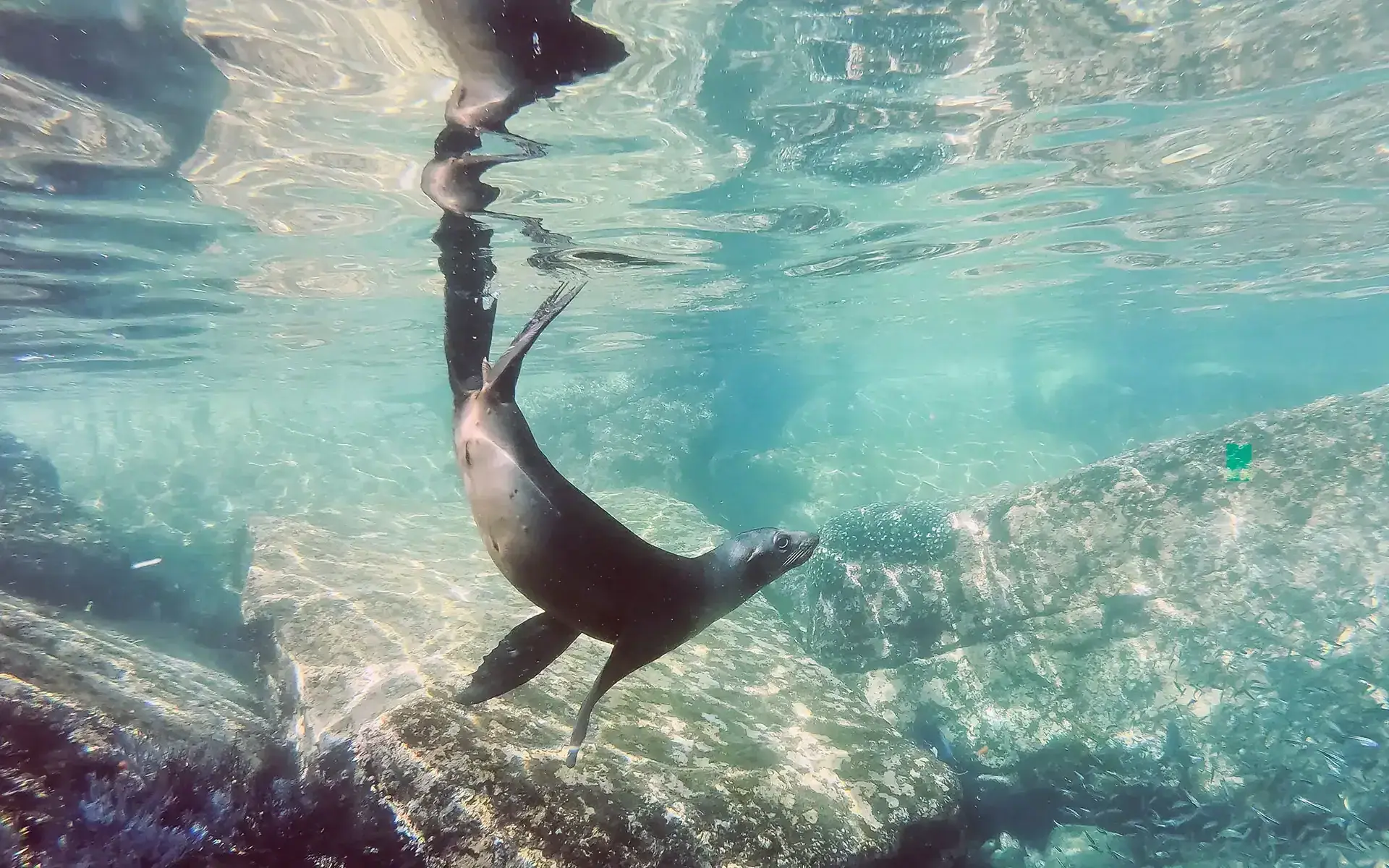
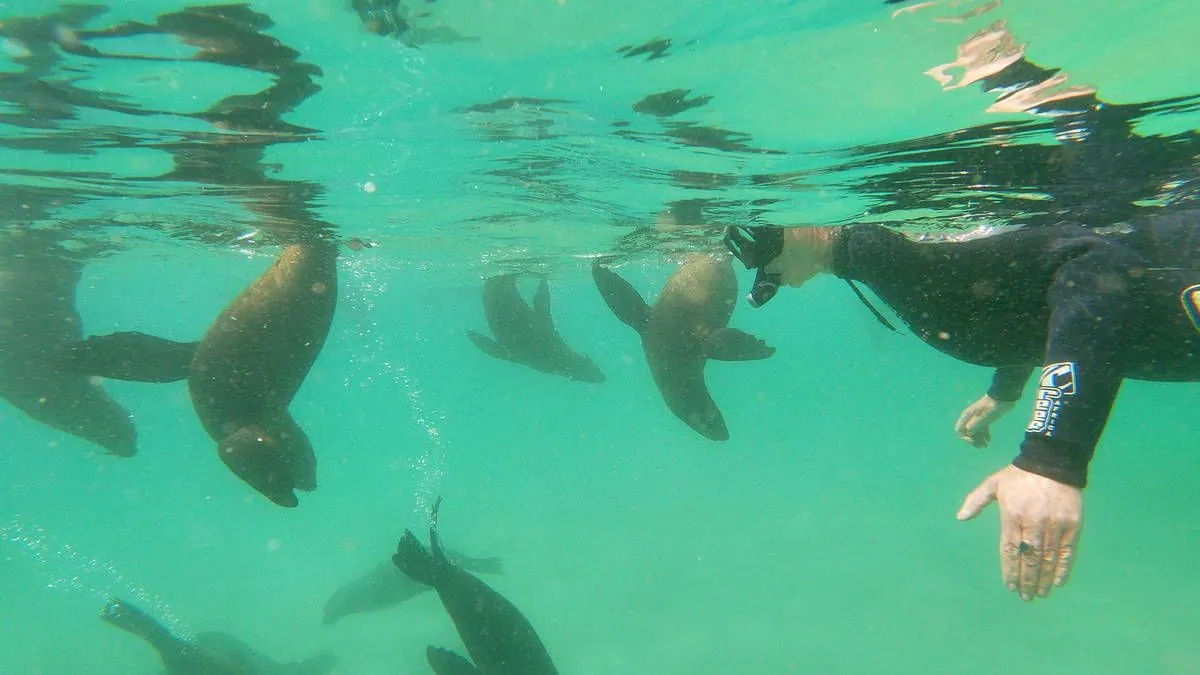
Cape fur seals are wild animals, not trained ones. Most of your time in the water is spent floating while the seals come to look at you.
They also have sharp teeth, so the rules are simple:
- Don't touch a seal or reach out towards one.
- Don't chase or dive at them. Let them come to you.
- Stay with the group and close to your guide.
- If the guide tells you to move or get out, do it straight away.
Your guide is a qualified divemaster and is in the water the whole time.
Sharks
Sharks are naturally present around the colony in winter, when sardines pass along this coast and young seals start hunting for themselves. A researcher watching from the Robberg cliffs between May and July 2019 recorded hundreds of encounters between great white sharks and seals.
Our season is built around that:
- June and July: no swimming at all. Seal viewing by boat continues.
- May, August and September: spotters on the mountain watch for sharks and alert the boats.
- October onwards: normal operations resume.
On every swim, a boat stays close and trips run in daylight with good visibility. The crew also watches the seals, because their behaviour is a good indicator of a shark nearby.
No operator can honestly promise that a wild ocean is free of sharks. What we can do is avoid the months when the risk is highest and keep watch in the months either side.
Rabies
In 2024, rabies was confirmed in Cape fur seals in South Africa, the first known outbreak in a marine mammal. Cases have since been found along much of the coast, and Plettenberg Bay has had confirmed cases too. Local authorities reported four by December 2024.
Rabies spreads through bites and scratches from an infected animal. Published research records no human case caught from a seal so far. People bitten by seals are given post-exposure treatment, which the World Health Organization says prevents the disease when it is started promptly.
Here is what we do:
- We work with the Department of Environmental Affairs and CapeNature.
- Spotters watch for unusual seal behaviour.
- Guides stay close to guests in the water.
- We carry first aid supplies for bites.
- We have slightly reduced the time in the water.
- The local hospital is prepared, with trained staff and vaccines.
If a seal ever bites or scratches you, on our trip or on any beach along this coast, wash the wound with soap and water for at least 15 minutes and get medical attention the same day.
If the outbreak makes you uneasy, choose the viewing trip. There is no pressure from us either way.
Sea conditions and swimming ability
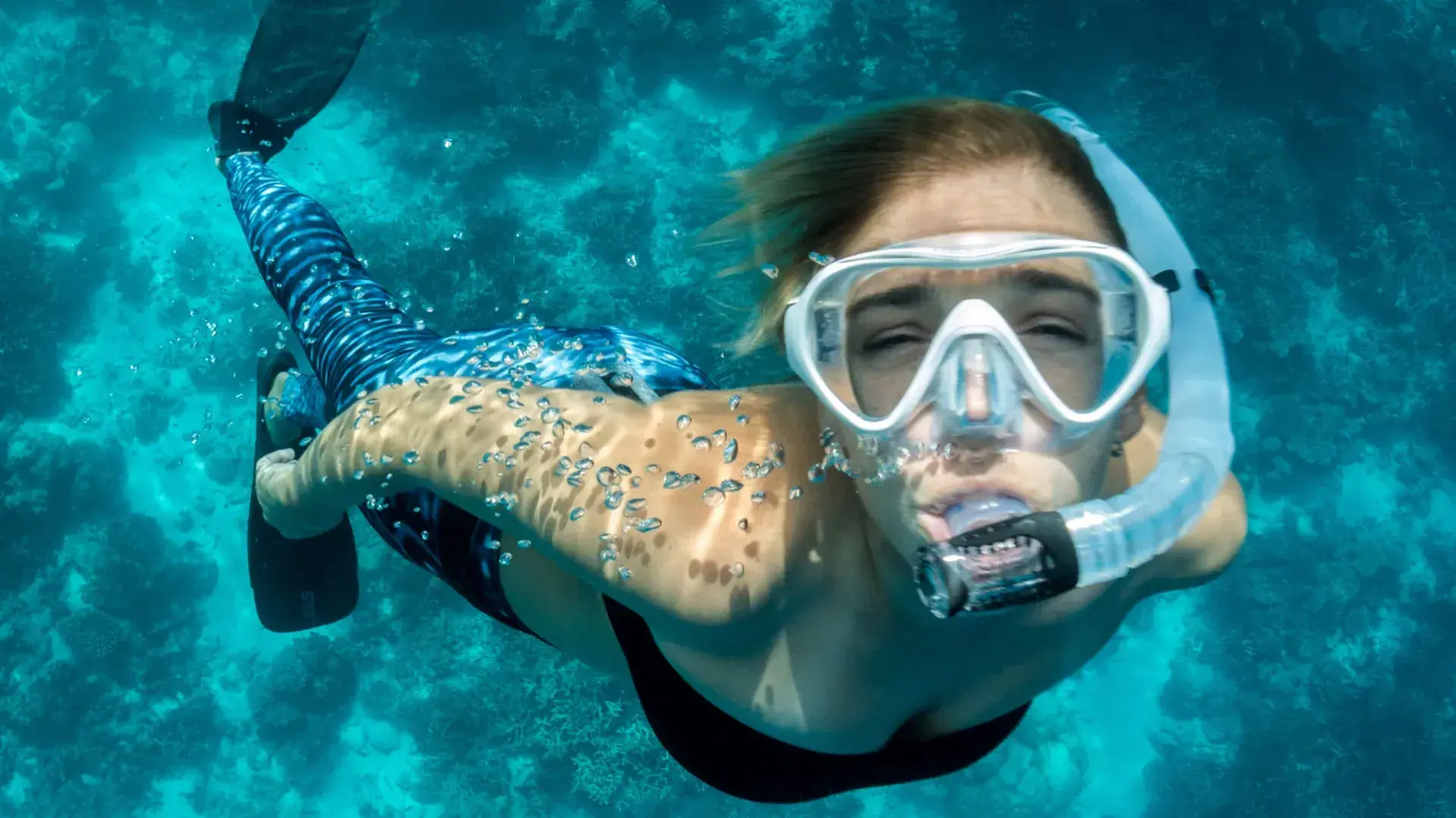
You need no snorkelling experience. The wetsuit keeps you buoyant, flotation aids are available on request, and you float more than you swim.
Trips depend on the weather. The crew cancels for strong east wind or east swell, lets booked guests know in advance, and refunds in full if no other slot suits you.
The water is cool. Average sea temperatures range from about 16°C to 22°C depending on the season, and all gear, including the wetsuit, is supplied. See what to wear and bring.
Who should think twice
- Anyone who panics in open water or with a mask on. Try the mask and snorkel in a pool first.
- Anyone with a heart, breathing or other medical condition. Speak to your doctor, and tell the crew before the trip.
- Children under 6. See swimming with seals with children.
People with disabilities are welcome. Please call ahead so the crew can plan properly.
Who is looking after you
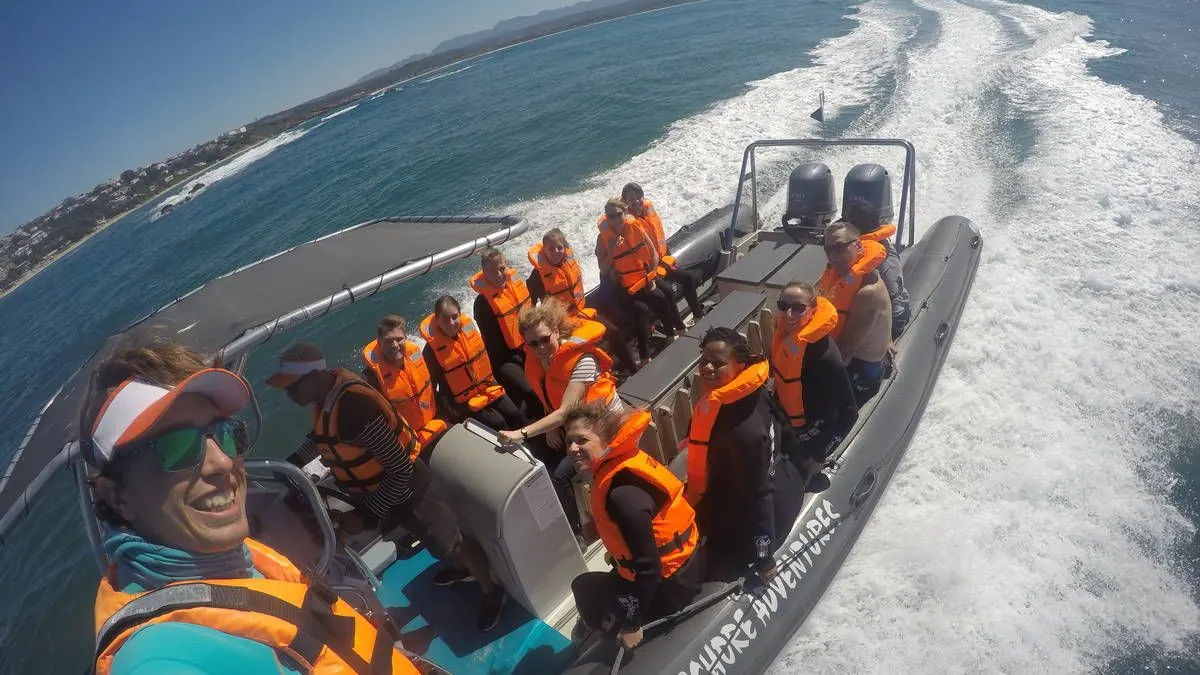
Our owner and skipper, Jaco Kruger, is station commander of NSRI Station 14, the volunteer sea rescue station in Plettenberg Bay. The company holds WESSA Blue Flag status and belongs to SATSA, Green Fins and the Seal Snorkel and Dive Operators Association.
None of that removes the risk, but it does mean the person making the call on the day also leads the town's sea rescue station. You can read more on our safety and about pages, and the FAQ covers the practical questions.
Quick answers
Do seals bite swimmers?
It can happen, because seals are wild animals with sharp teeth. You lower the chance by keeping your hands in, never touching or chasing a seal and staying close to your guide.
Are there sharks at the Robberg seal colony?
Yes, sharks are naturally present around the colony in winter. That is why swimming stops in June and July, and why spotters on the mountain watch for sharks in May, August and September.
Can you get rabies from swimming with seals?
Rabies spreads through the bite or scratch of an infected animal. Researchers have recorded no human case caught from a seal so far, and any bite is treated straight away as a precaution.
Do I need to be a strong swimmer?
No. The wetsuit keeps you buoyant, flotation aids are available on request and a guide is in the water with you the whole time.
What happens if the weather is bad?
The crew cancels for strong east wind or east swell and lets you know in advance. If no other slot suits you, you are refunded in full.