Plan your trip. 5 minute read. Updated 3 October 2026.
The best time to swim with seals in Plettenberg Bay is from October to April, when the sea is at its warmest and trips run as normal. Swimming stops completely in June and July, and in May, August and September it runs with shark spotters watching from the mountain.
The seals themselves are at Robberg all year. What changes is the water temperature, the shark risk and how busy the town is.
The year at a glance
| Month | Seal swim | Average sea temperature | Also worth knowing |
|---|---|---|---|
| January | Running | 21°C to 22°C | Peak holiday season, so book ahead. Young pups at the colony. |
| February | Running | 21°C to 22°C | Warm water and fewer people. |
| March | Running | 20°C to 22°C | Still warm, and quiet outside the school holidays. |
| April | Running | 18°C to 20°C | The sea starts to cool. |
| May | Running, with shark spotters | 17°C to 20°C | Humpback whales begin to pass. |
| June | No swimming | 17°C to 19°C | Seal viewing continues. Southern right whales arrive. |
| July | No swimming | 17°C to 18°C | Seal viewing continues. Whale season. |
| August | Running, with shark spotters | 16°C to 18°C | Whale season. Usually the wettest time of year. |
| September | Running, with shark spotters | 17°C to 18°C | Whale season. A quiet month in town. |
| October | Normal operations resume | 17°C to 19°C | Whales still about. Seal bulls start claiming territory. |
| November | Running | 18°C to 20°C | Pups are born from late in the month. |
| December | Running | 20°C to 21°C | Pupping peaks early in the month. Busiest time in town. |
The temperatures are long-term averages from two public sea temperature datasets, which differ by a degree or two. On the day, the sea can be several degrees colder than the average, in any season.
October to April: the main season
This is the main swimming season. The sea warms from spring into summer and is usually at its warmest from January to March.
December and January are the busiest weeks of the year in Plett. An extra 08:00 trip is added in busy season, but it is still worth booking early. See the swim with seals page for times and availability.
February and March are our pick. The water is warm, the holiday crowds have gone home and the town is calmer.
May, August and September: the shoulder months
Swims run in these months, with one change. Spotters on the mountain watch the water around the colony for sharks and alert the boats.
The sea is cooler, close to its yearly low in August and September, though the wetsuit takes care of most of that. In return you get a quiet town and whales in the bay. Southern right whales are usually here from about June to November.
If you are visiting in a shoulder month, read is swimming with seals safe? so you know how the shark watch works.
June and July: no swimming
Sharks are naturally present around the colony in winter, when sardines pass along the coast and young seals start hunting. We stop swimming for these two months.
You can still see the seals. Seal viewing by boat continues through winter, and it pairs well with whale season.
This is also when our crew runs Sardine Run expeditions on the Wild Coast, if you want time in the water in midwinter.
What changes at the colony
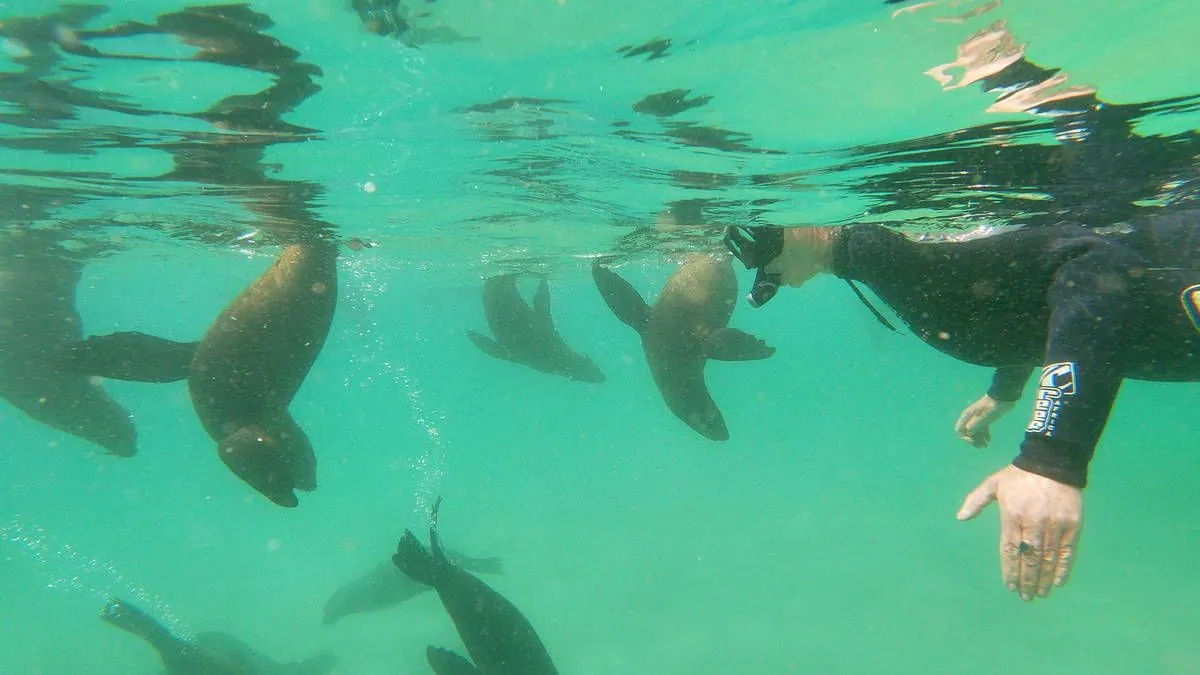
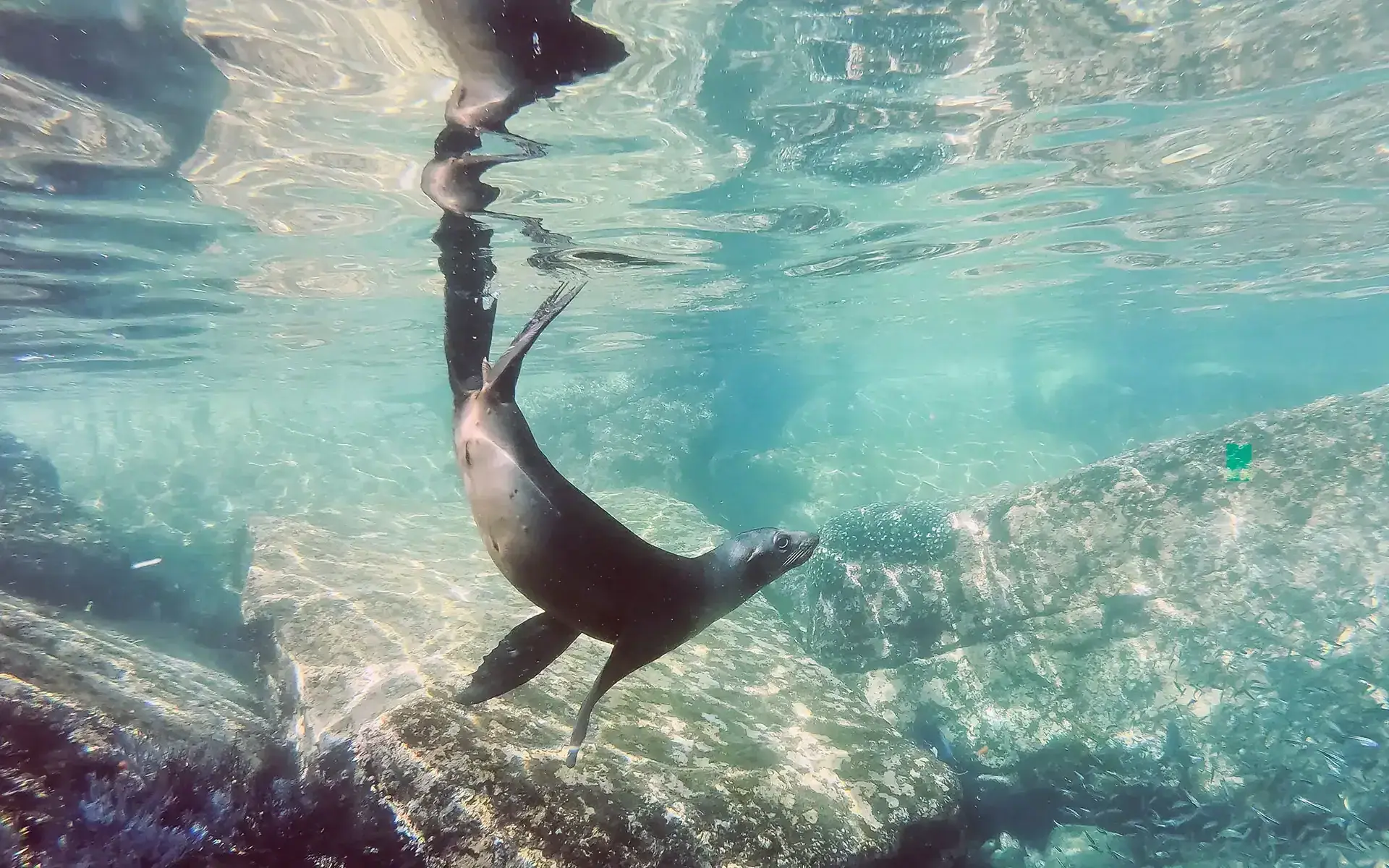
Cape fur seals follow a yearly cycle, and you will notice different things depending on when you come.
- October: bulls arrive and start claiming territory.
- Late November to early December: pups are born. They are black at birth.
- Summer: young pups stay on and near the rocks while their mothers come and go to feed.
- Autumn into winter: the pups moult to grey, and young seals begin hunting for themselves.
Our guide to the Robberg seal colony has more on the animals.
Weather, wind and visibility
Trips leave daily at 10:00, 12:00 and 14:00, and they depend on weather and numbers.
Wind and swell matter more than rain. The crew cancels for strong east wind or east swell, which can arrive in any month. You will be told in advance, and if no other slot suits you, you are refunded in full.
Plett's climate is mild. Summer days average around 25°C and winter days around 20°C, so the air is seldom the problem.
Rain falls in every month, with August and September usually the wettest. Rain alone rarely stops a swim, because you are getting wet anyway.
Underwater visibility changes from day to day with swell, wind and rain. Nobody can promise it weeks ahead, in any season.
How to plan around all this
- Decide whether you want to swim or watch. If you are here in June or July, it is seal viewing.
- Book for early in your stay, so there is room to move the trip if the wind turns.
- Pack for the season. See what to wear and bring.
- If your dates are fixed and you are unsure about conditions, ask us. We would rather give you a straight answer than a hopeful one.
Quick answers
Can you swim with seals in Plettenberg Bay in winter?
Not in June and July, when swimming stops because sharks are naturally present around the colony. Seal viewing by boat continues through winter, and swims run in May, August and September with shark spotters on watch.
Which month has the warmest water?
January, February and March are usually the warmest, with average sea temperatures of roughly 20°C to 22°C. The sea can still drop by several degrees for a few days at any time of year.
Are the seals at Robberg all year round?
Yes. The colony is there in every month, which is why sightings are guaranteed on the seal viewing trip.
When are the seal pups born?
Cape fur seal pups are born from late November to early December. The pups are black at birth and moult to grey over their first few months.
What if my trip is cancelled because of the weather?
The crew lets you know in advance and offers another slot. If none suits you, you are refunded in full.