Plettenberg Bay. 7 minute read. Updated 3 October 2026.
The best things to do in Plettenberg Bay are outdoors: walk Robberg Nature Reserve, get on or into the ocean, choose a beach for the day, and visit the wildlife sanctuaries and forests around The Crags. This guide groups the main options by type, with honest notes on who each one suits and what to do when it rains.
We run boat trips from Central Beach, so the sea is what we know best. The rest is where we send our own guests before and after their trips.
Walk Robberg Nature Reserve
If you only do one thing in Plett, make it Robberg. The peninsula is a CapeNature reserve and World Heritage Site about 8 km south of town, with three circular trails:
- The Gap: 2.1 km, about 30 minutes.
- Witsand: 5.5 km, about 2 hours.
- The Point: 9.2 km, about 4 hours.
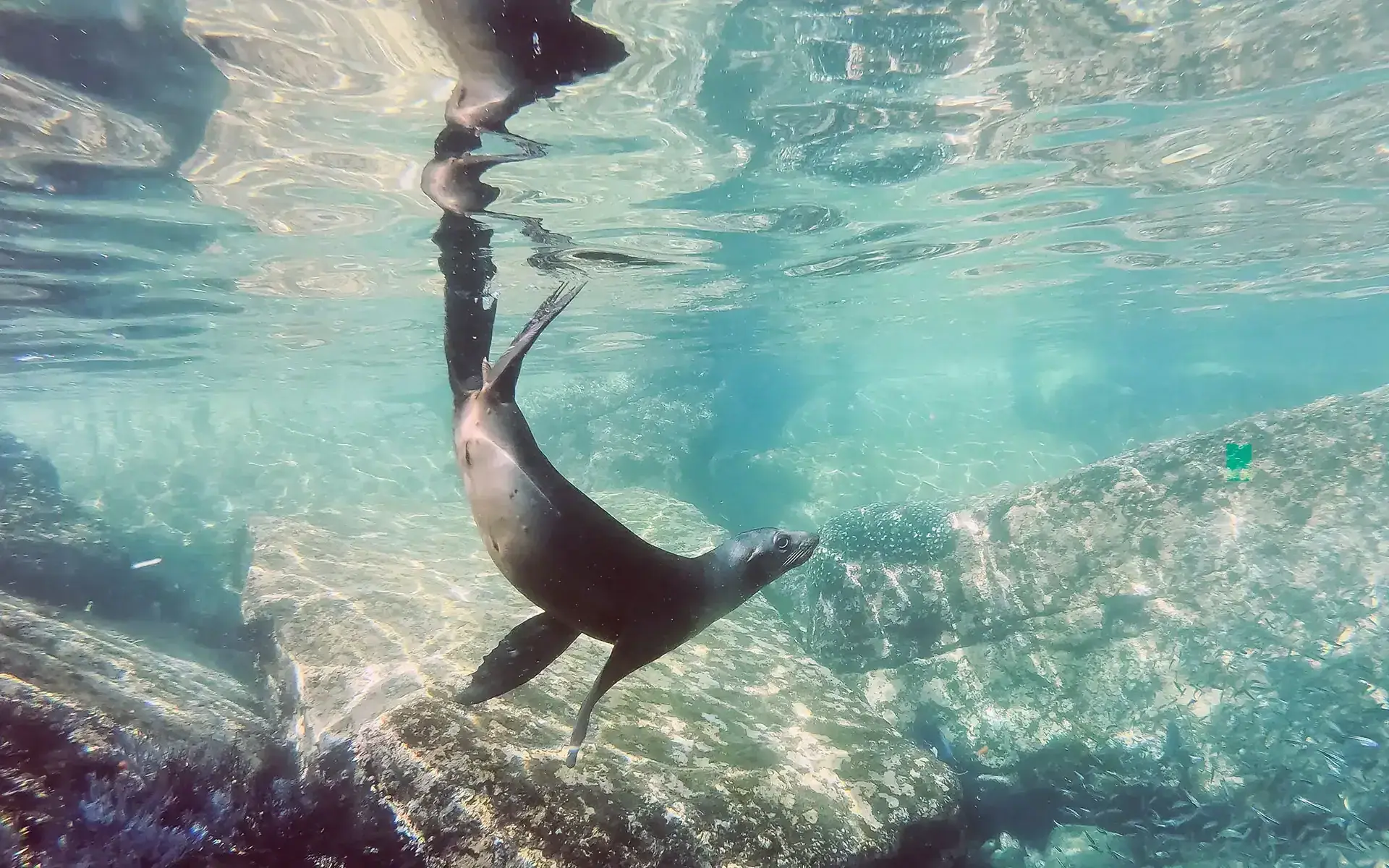
The reserve has its own seal colony, which you can look down on from the trail. From about June to November, look for southern right whales in the bay below.
Take water, a hat and proper shoes, and keep back from the cliff edges when the wind is up. The longer circuits are real hikes, with sand, rock and some steep sections. The Nelson Bay Cave interpretive centre explains the Stone Age people who lived on the peninsula.
For more on the animals, read our guide to the Robberg seal colony.
Get on or into the ocean
The bay has seals all year, dolphins in every season and whales in winter and spring. In 2023 the World Cetacean Alliance named Plettenberg Bay a Whale Heritage Site.
Swim with the seals
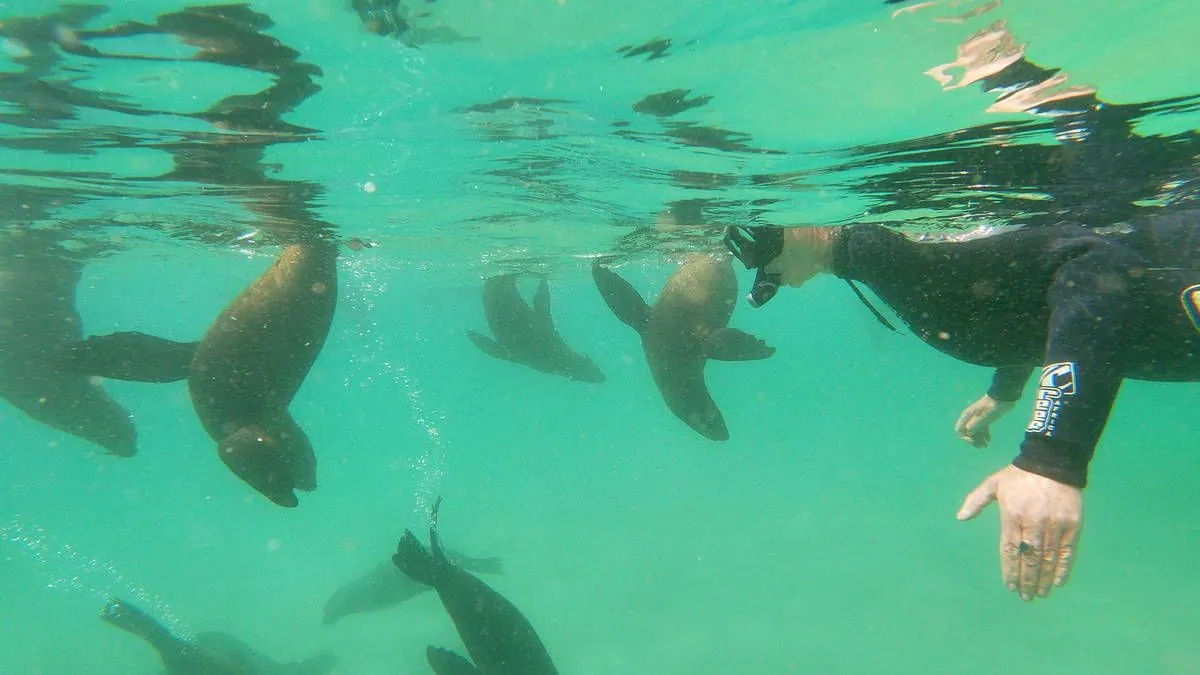
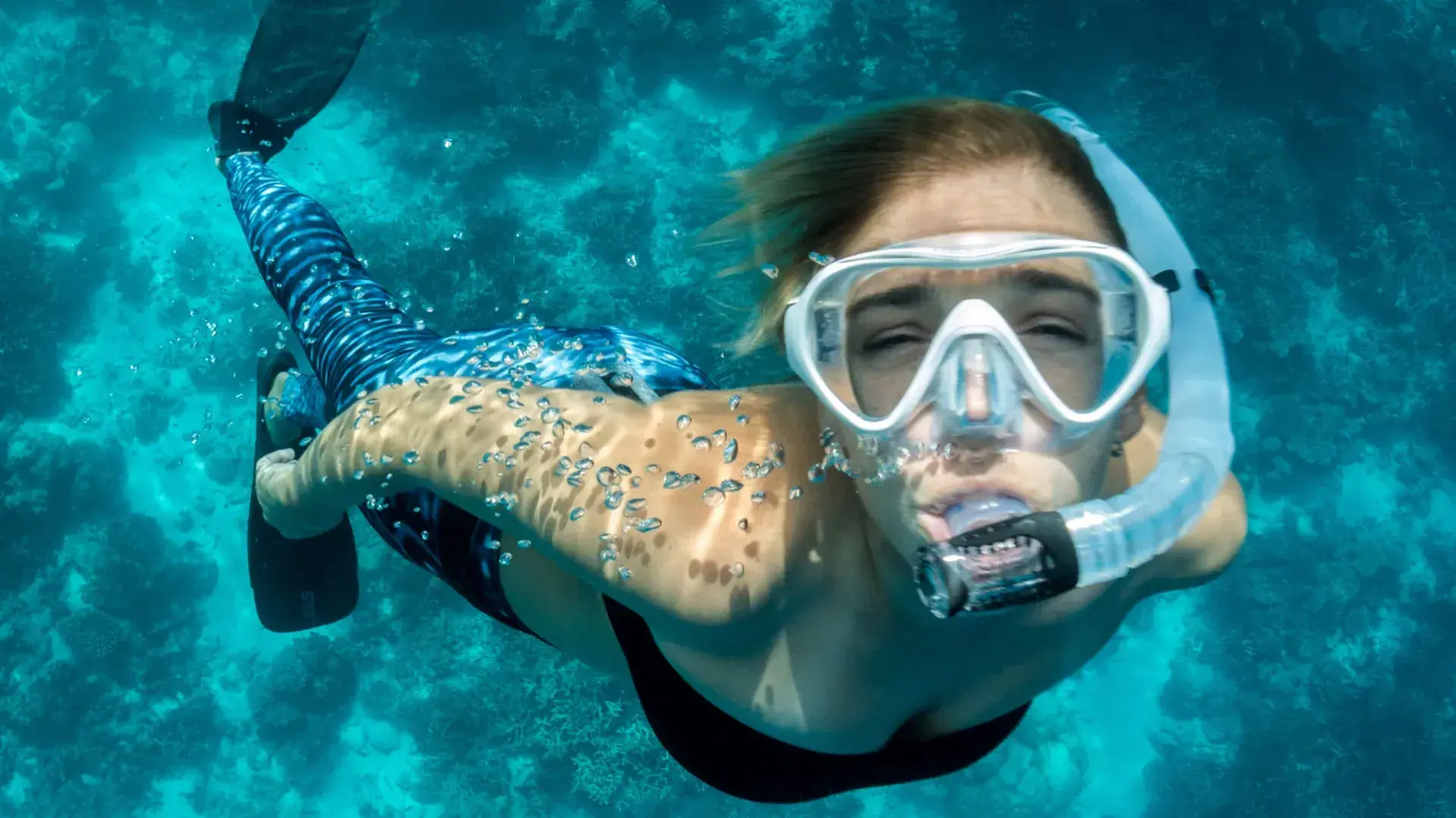
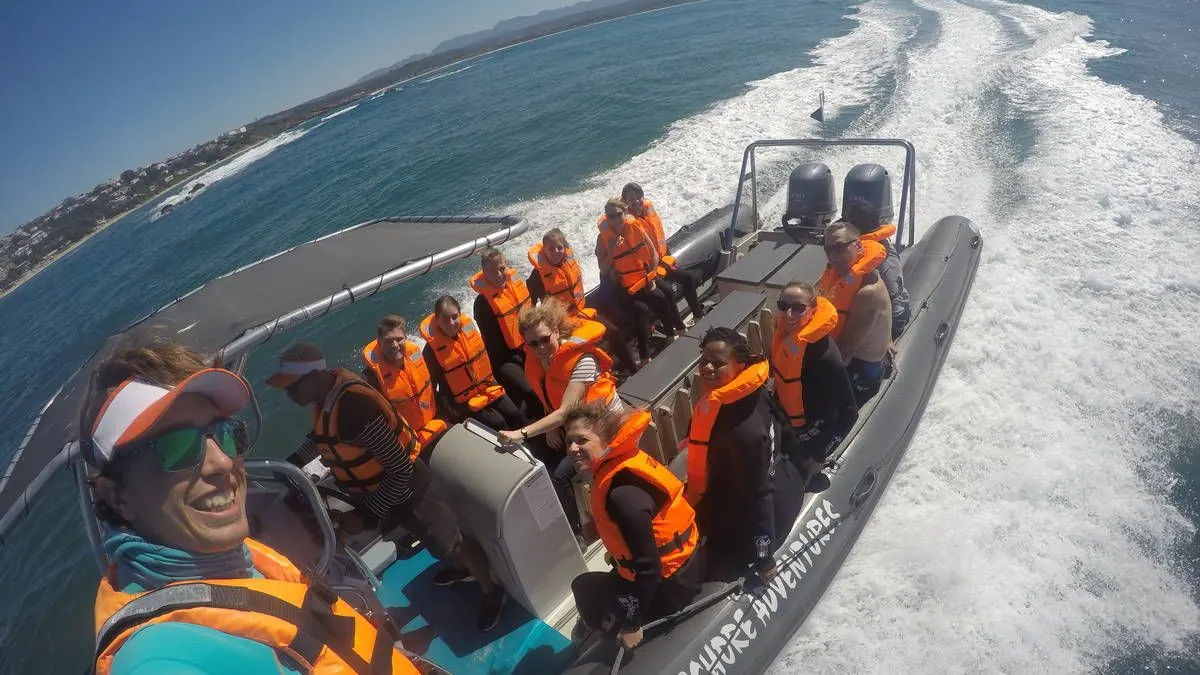
This is our own trip, so weigh our opinion accordingly. A boat launches off Central Beach and runs along the coast to the colony at Robberg, where you snorkel with a guide for up to about 30 minutes. The whole outing takes about an hour and a half, all the gear is supplied and you need no experience.
It isn't for everyone. The sea is cool, the seals are wild, and swimming stops in June and July because of sharks. Read is swimming with seals safe? before you decide, then see the swim with seals page for times and booking.
Watch the seals and stay dry
Seal viewing uses the same boat without the wetsuit. It suits small children (the minimum age is 2), grandparents and anyone who would rather keep a jacket on. It also runs through winter, when the swim does not.
Whale and dolphin watching
Southern right whales visit from about June to November, humpback whales pass on their migrations, and Bryde's whales and dolphins are around all year. Our guide to Plettenberg Bay boat trips compares the options.
You can also watch from land. Robberg, the rocks at Lookout Beach and the viewpoints at Keurboomstrand are good places to sit with binoculars.
Choose a beach
Plett has a long run of sandy beaches, and several of them hold Blue Flag status.
- Central Beach: the busiest, with lifeguards in season, restaurants close by and the boats launching straight off the sand.
- Lookout Beach: a Blue Flag beach for swimming, bodyboarding and families.
- Robberg Beach: the one for long walks, running towards the peninsula.
- Keurboomstrand: a Blue Flag beach east of the river mouth, with lifeguards in season.
- Nature's Valley: about 34 km from town, where forest and lagoon meet the sea. It is known for rip currents, so take care.
Swim where lifeguards are on duty. They work the main beaches in season, and outside those months you are on your own.
Visit the sanctuaries at The Crags
The Crags, a short drive east of town on the N2, has a cluster of wildlife sanctuaries.
- Birds of Eden: a free-flight aviary whose dome covers about two hectares of forest, home to more than 3,500 birds. You walk the boardwalks at your own pace.
- Monkeyland: a free-roaming primate sanctuary with more than 550 primates, seen on a guided forest walk.
- Jukani: a sanctuary for rescued big cats.
- Tenikwa: a non-profit wildlife rehabilitation and awareness centre. Visitor fees help fund its work with injured and abandoned animals, including penguins.
Tenikwa is also our partner when seal pups strand on local beaches. Our conservation page explains how that works.
Spend time on the Keurbooms River
The Keurbooms River Nature Reserve is about 8 km past town on the N2. You can hire a canoe at the gate, or take the ferry, which travels about 5 km upstream through a forested gorge.
Pack a picnic, swim in the river and look for Knysna loeries, fish eagles and giant kingfishers. If you want a night out there, a 5 km canoe trail leads to an overnight cabin at Whiskey Creek.
The river is also a useful fallback on days when the sea is too rough for boats.
Forest and adventure nearby
- Harkerville forest: about 20 km from the centre of Plett. The Garden of Eden has short forest walks, including an 800 metre trail for wheelchairs. The Kranshoek coastal walk is a demanding 9 km circuit, and there are mountain bike routes of 12 to 23 km.
- Canyoning in The Crags: abseiling beside waterfalls, optional jumps and swims through a river gorge, all with a guide.
- Bloukrans Bridge: a 216 metre bungee jump from the bridge on the N2, at the border between the Western and Eastern Cape.
- Tsitsikamma: Storms River Mouth is about 65 km from Plett, with a 1 km walk to the suspension bridge, plus kayaking and tubing on the river.
You can book canyoning and the Storms River trips through our activities page.
Eat, drink and browse
The Plett Winelands is a small, cool-climate wine region stretching from Harkerville to The Crags. It is known for Méthode Cap Classique sparkling wine, along with Sauvignon Blanc, Chardonnay and Pinot Noir. Bramon, Newstead and Kay and Monty are among the farms that welcome visitors.
For browsing, try the Harkerville Saturday Market, or Old Nick Village, a collection of shops, studios and cafes set in a garden. For a meal near the water, Central Beach and Lookout Beach both have restaurants.
Rainy-day ideas
A wet day doesn't have to be a lost one.
- Go wine tasting. A tasting room works as well in the rain as in the sun.
- Browse Old Nick Village, or the Harkerville market on a Saturday, where many of the stalls are under cover.
- Book a spa treatment. There are several spas in the forest around The Crags.
- Don't write off the ocean. Our crew cancels for strong east wind or east swell, not for rain, and on a seal swim you are getting wet anyway.
When to come
Plett has a mild climate. Summer days average around 25°C and winter days around 20°C, and rain can fall in any month, with August and September usually the wettest.
December and January are the busiest weeks, so book accommodation and activities ahead. February and March are warm and quieter. Winter and spring bring the whales.
How to fit it together
A simple three-day plan:
- Day one: Robberg in the morning and a beach in the afternoon.
- Day two: a boat trip, then the sanctuaries at The Crags.
- Day three: the Keurbooms River, or a day out to Tsitsikamma.
Book the boat trip early in your stay. If the weather turns, you will have room to move it.
For the best months in the water, see the best time to swim with seals. If you would like help planning, get in touch.
Quick answers
What is Plettenberg Bay best known for?
Plett is best known for its beaches, the Robberg Nature Reserve and its marine life. Seals live here all year, dolphins are seen in every season and whales visit in winter and spring.
How many days do you need in Plettenberg Bay?
Three days covers Robberg, a boat trip, a beach day and the sanctuaries at The Crags. A week gives you time for the Keurbooms River, the wine farms and a day in Tsitsikamma as well.
What can you do in Plettenberg Bay when it rains?
Go wine tasting in the Plett Winelands, browse Old Nick Village or the Harkerville Saturday Market, or book a spa treatment at The Crags. Boat trips often still run in rain, because the crew cancels for wind and swell rather than for wet weather.
When is whale season in Plettenberg Bay?
Southern right whales are usually in the bay from about June to November, and humpback whales pass on their migrations. Bryde's whales and dolphins can be seen all year.
Is Plettenberg Bay good for children?
Yes. There are lifeguards on the main beaches in season, the sanctuaries at The Crags suit all ages, and seal viewing by boat takes children from 2 years old.