Plan your trip. 5 minute read. Updated 3 October 2026.
Both places have large Cape fur seal colonies, and the right choice mostly depends on your route: Hout Bay if you are staying in Cape Town, Plettenberg Bay if you are travelling the Garden Route. The main differences are water temperature, minimum age, shark season and how each place has responded to the seal rabies outbreak.
We operate in Plettenberg Bay, so we have an obvious interest here. We have described Hout Bay from what Cape Town operators publish about their own trips, and we suggest you check their current details before you book.
Side by side
| Feature | Robberg, Plettenberg Bay | Duiker Island, Hout Bay |
|---|---|---|
| Where | Garden Route, about 520 km from Cape Town | Cape Peninsula, roughly 20 to 40 minutes' drive from the city centre |
| Colony | Several thousand seals on a mainland peninsula | About 5,000 seals on a small rocky island |
| Typical sea temperature | About 16°C to 22°C | About 10°C to 15°C |
| Boat ride | Beach launch from Central Beach, then along the coast | A short ride from Hout Bay harbour |
| Time in the water | Up to about 30 minutes | Traditionally 40 to 60 minutes, now often less |
| Whole outing | About 1.5 hours | About 2.5 to 4 hours |
| Minimum age to snorkel | From 6 years | Usually 10 years |
| Swimming ability | No experience needed | Operators generally ask that you can swim |
| Large sharks | Present in winter, no swimming in June and July | Operators report no great white sightings on their trips |
| Since the rabies outbreak | Swims continue at the colony, with extra precautions | Several operators have moved the snorkel away from the colony |
Water temperature and wetsuits
This is the difference you will feel first. Hout Bay is on the cold Atlantic side of the Cape Peninsula, and operators there list water of roughly 10°C to 15°C. They supply thick wetsuits, typically 5 mm with a hood, and they need to.
Plettenberg Bay is on the warmer south coast. The sea usually averages between about 16°C and 22°C through the year, and it is warmest from January to March. You still wear a wetsuit, but the cold is less of a factor.
If you feel the cold or you are bringing children, that matters. If you are happy in cold water, it may not.
The setting
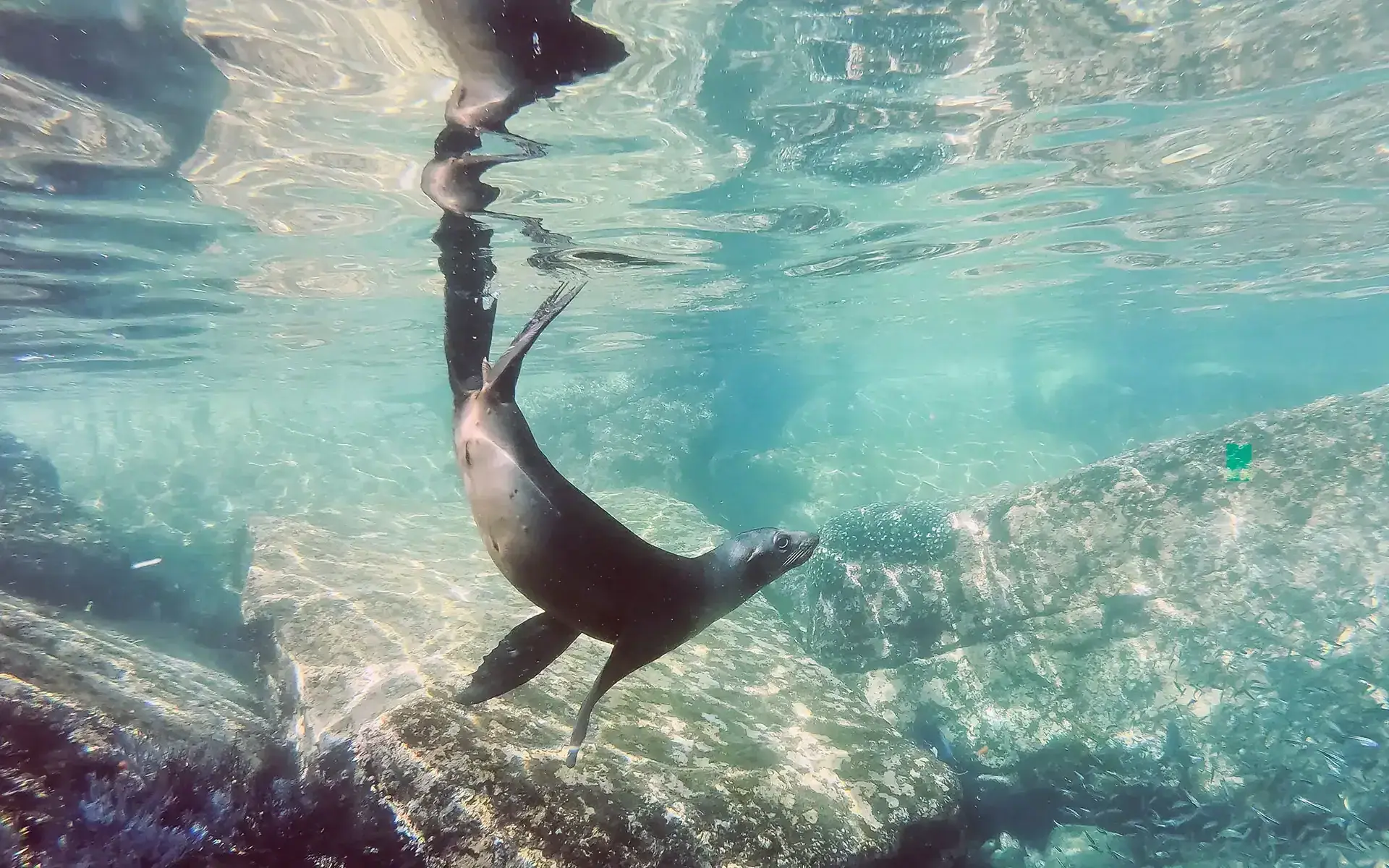
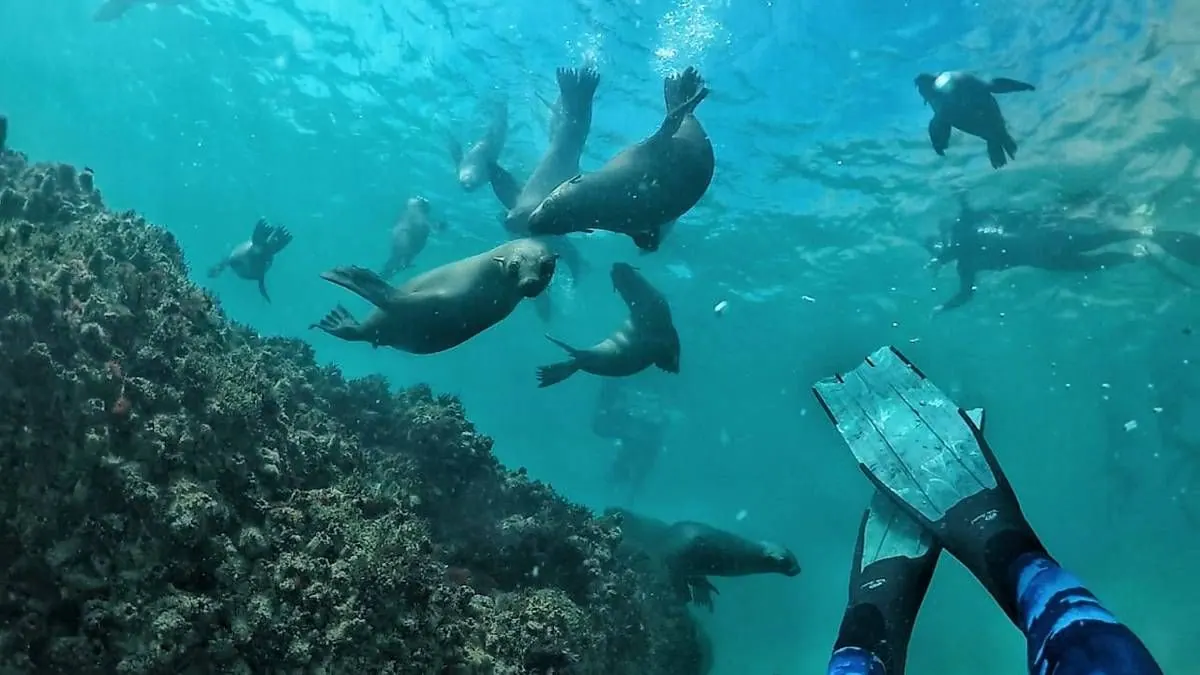
Duiker Island is a small rocky island a short boat ride from Hout Bay harbour, below the mountains of the Cape Peninsula. The water around it is shallow and thick with kelp. Snorkelling there means a kelp forest as well as seals, and operators describe small endemic catsharks living among the kelp.
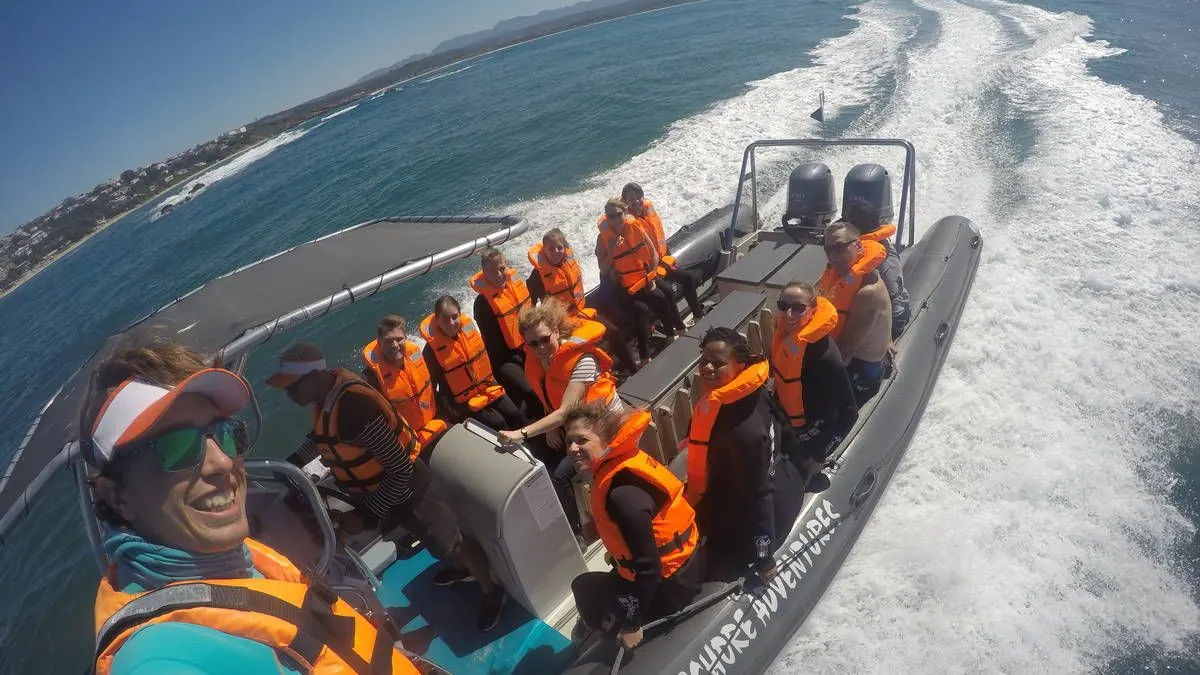
Robberg is a peninsula inside a nature reserve and Marine Protected Area. The boat launches off the beach and follows the coast to the colony, where the seals haul out on the rocks below the cliffs. Here the focus is on the seals and the peninsula itself.
Both are good places to see seals. They simply look different.
Sharks
At Robberg, sharks are naturally present around the colony in winter. We stop swimming in June and July, and in May, August and September spotters on the mountain watch for sharks and alert the boats.
At Duiker Island, operators report that no great white sharks have been seen on their snorkelling trips, and they point to the shallow water and kelp as the reason. That is a real advantage for Hout Bay.
Hout Bay has its own seasonal limit. The island sits in open Atlantic swell, and Cape Town travel guides note that winter trips are often cancelled because of rough seas.
Rabies and how each place has responded
Rabies was confirmed in Cape fur seals in 2024, and cases have been found along the coast, including around Cape Town and in Plettenberg Bay. Neither place is free of it.
The two places have responded in different ways:
- Hout Bay: several operators say they no longer snorkel at the seal colony. Their trips now combine kelp forest snorkelling in other spots with seal viewing from the boat.
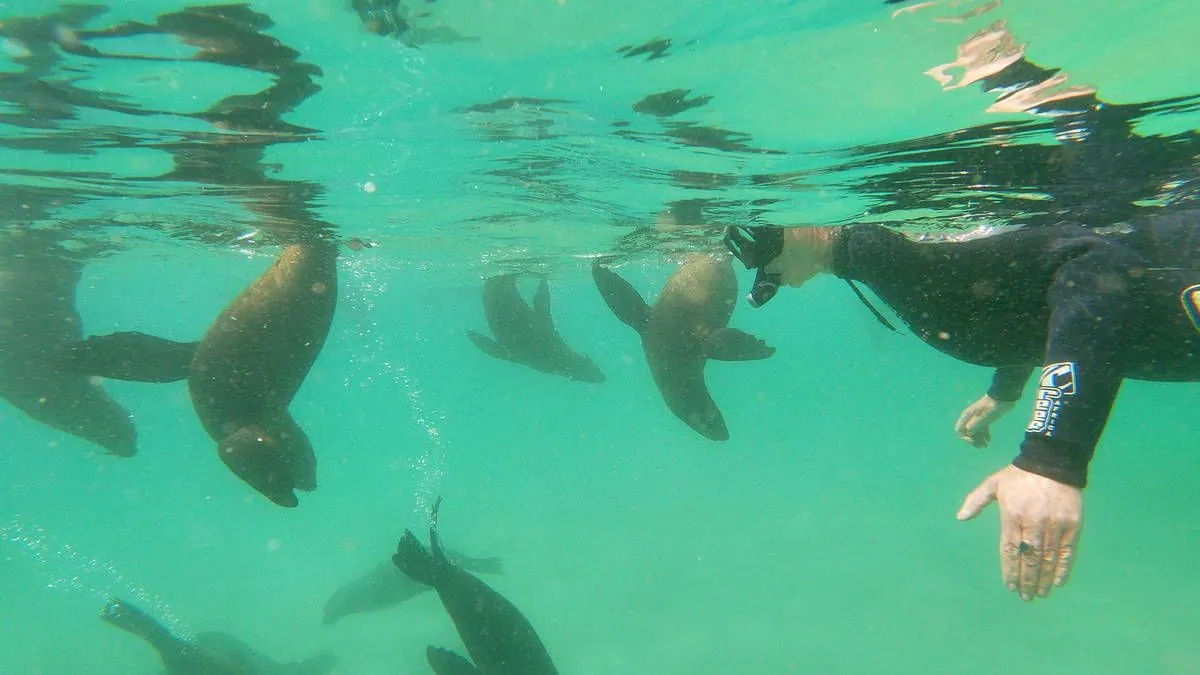
- Plettenberg Bay: we still swim at the colony. We work with the Department of Environmental Affairs and CapeNature, have spotters watching for unusual seal behaviour, keep guides close in the water, carry first aid supplies for bites and have slightly reduced the time in the water.
Both approaches are reasonable. One removes the contact, and the other manages it. If you would rather not be in the water with seals at all, you can watch from the boat in either place. In Plett that is our seal viewing trip.
Our guide to whether swimming with seals is safe goes through the risks in detail.
Children and nervous swimmers
Hout Bay operators usually set the minimum snorkelling age at 10 and ask that guests can swim. With colder water and longer trips, that makes sense.
In Plett the swim suits children from 6 years and you need no experience. The wetsuit keeps you buoyant, flotation aids are available on request and the guide is in the water the whole time. See swimming with seals with children.
Fitting it into your trip
Hout Bay is the easy one if Cape Town is your base. It is a short drive from the city, and the trip fits into half a day.
Plettenberg Bay is about 520 km from Cape Town, roughly six hours by road. Nobody should make that drive for a seal swim alone. It makes sense as part of a Garden Route trip, where there are plenty of other things to do in Plettenberg Bay.
Which one to choose
Choose Hout Bay if:
- you are staying in Cape Town and not travelling east
- you want to snorkel in a kelp forest
- cold water doesn't put you off
- you are visiting in June or July, when our swim is paused
Choose Plettenberg Bay if:
- you are travelling the Garden Route
- you want warmer water
- you have children between 6 and 10, or nervous swimmers
- you want to be in the water at the colony itself
If your route covers both, there is no reason not to do both. They are different trips. Details and booking for ours are on the swim with seals page.
Quick answers
Is it better to swim with seals in Cape Town or Plettenberg Bay?
Neither is better for everyone. Hout Bay is close to Cape Town and has a kelp forest, while Plettenberg Bay has warmer water, takes younger children and still runs swims at the colony itself.
Is the water warmer in Plettenberg Bay than in Hout Bay?
Yes. The sea in Plettenberg Bay usually averages between about 16°C and 22°C, while Hout Bay operators list roughly 10°C to 15°C.
Can you still snorkel with seals in Hout Bay?
Check the specific trip before you book. Since the rabies outbreak, several Cape Town operators say they no longer snorkel at the seal colony and instead offer kelp forest snorkelling with seal viewing from the boat.
How far is Plettenberg Bay from Cape Town?
About 520 km by road, which is roughly a six-hour drive along the N2.
What is the minimum age for seal snorkelling?
In Plettenberg Bay our swim suits children from 6 years. Hout Bay operators usually set the snorkelling minimum at 10 years.